
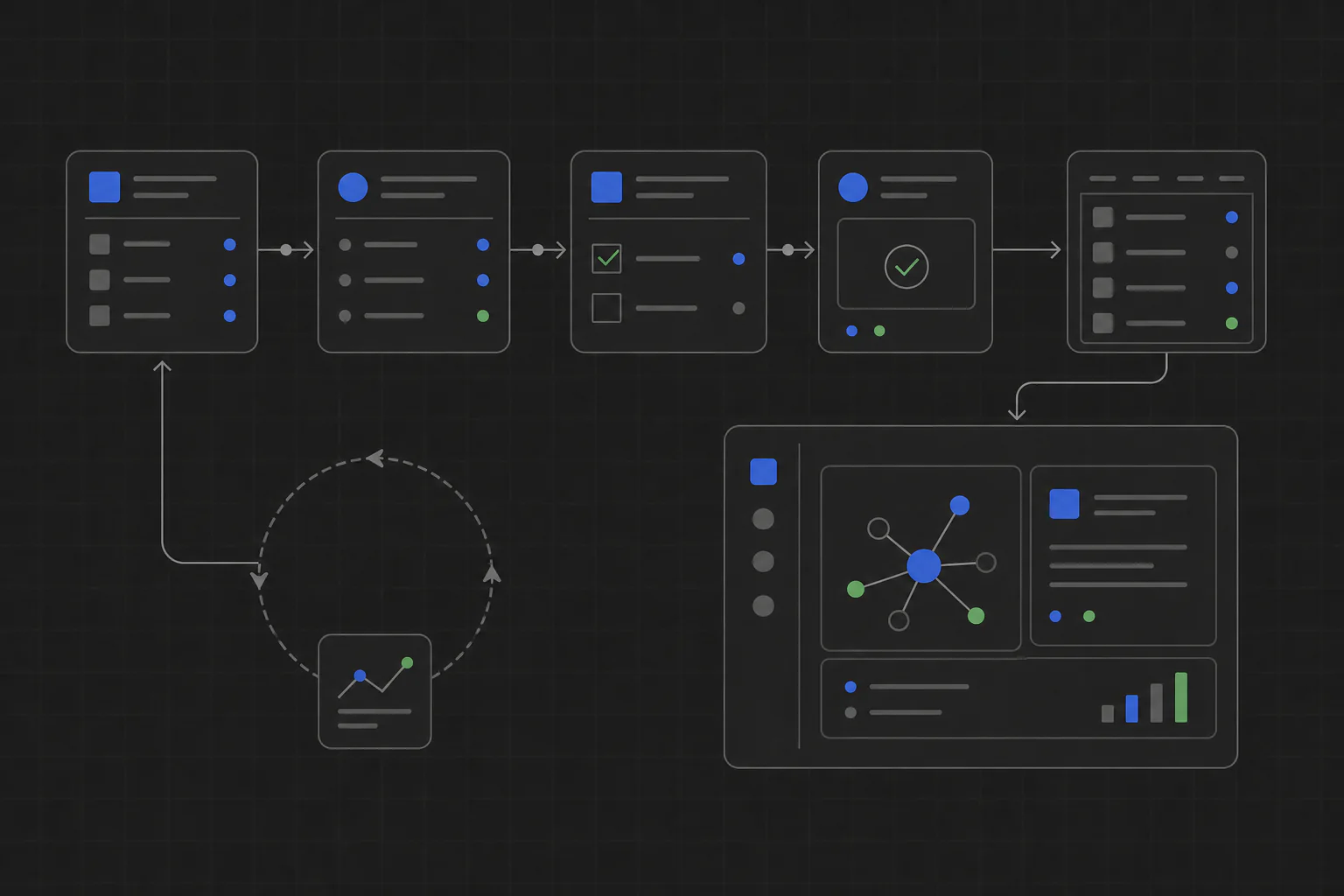
Vibe coding gets you a working internal tool in an afternoon. What it does not give you is distribution, access review, updates, or a sane cost model, which is why most vibe-coded tools never survive contact with a team. TinyAtom supplies exactly that missing half: review, local install, private company sharing, and updates, free.
The shift that is actually happening
Ask around a small company in 2026 and someone has already vibe coded something: a scheduling helper, a client tracker, an approval queue. The tools they use split into two camps. Hosted platforms such as Base44, Lovable, Bolt, and Replit build web apps in a browser workspace. Coding agents such as Claude Code and Codex build on your own machine from plain-language instructions. Either way, the person who understands the workflow now builds the tool, and that part genuinely works.
The four walls every vibe-coded tool hits
Read any community where people share these projects and the same four problems repeat, almost word for word.
1. “How do I get my team to use it?” The demo works on your screen. Now a teammate needs it. A hosted app means accounts, links, and convincing people to trust a URL you made; an agent-built app means a folder of code they cannot run. Builders consistently report distribution, not construction, as the hard part.
2. “Can we depend on this?” A prototype that mostly works is fine for one person and unacceptable for a team of fifty. Going from cool prototype to something people rely on needs versioning, updates that actually reach users, and a clear owner.
3. “Who checked what it can access?” Vibe-coded apps built by people who do not think about security is the industry’s loudest current worry, and it is legitimate: an internal tool touches customer lists, finances, and files. Somebody has to review that before it runs, and in the hosted workflow usually nobody does.
4. “Why is this suddenly expensive?” Hosted platforms meter by credits or usage, and builders report burning through allowances mid-build, surprise overage bills, and paid deployment on top. The tool was supposed to save money.
How TinyAtom closes each gap
TinyAtom is a free macOS app built around exactly this lifecycle. A coding agent you already pay for (Claude Code, Codex, Cursor, or Gemini) does the vibe coding; TinyAtom does everything the demos skip.
- Distribution: the finished tool installs like a normal app and publishes to a private company list. Teammates install it themselves; no accounts, no links to trust, no server.
- Dependability: the build starts from requirements and a plan you approve, and updates ship as new versions that installed copies pick up.
- Security: before the tool runs, TinyAtom lists every capability it requested: files, data, network, computer features. You approve the list or the tool does not run. Data stays on the computer.
- Cost: TinyAtom is free and has no credits to burn. The only spend is the agent subscription your company already has, and the tool costs nothing to host because nothing is hosted.
The step-by-step version of this workflow is in build internal tools with Claude Code, and non-technical builders should start with Claude Code for non-developers.
When a hosted vibe coding platform is the right call
If the thing you are building is customer-facing, needs a public URL, or must be reached from any browser without installing anything, a hosted platform is the right shape, and Base44, Lovable, and Replit compete well there. Internal tools are the opposite case: a known set of users, sensitive data, and no reason to put any of it on the public internet. That case is what local-first was made for. The full comparison is in Base44 vs Lovable vs Claude Code.