Base44 vs Lovable vs Claude Code: which builds your internal tools?

Three very different answers to the same prompt. Base44 and Lovable are hosted vibe coding platforms; Claude Code is an agent that builds on your machine. This comparison looks at what each produces, what each really costs, and which fits software your team runs on company data.

Published 8 min read Base44 · Lovable · Claude Code · Comparison
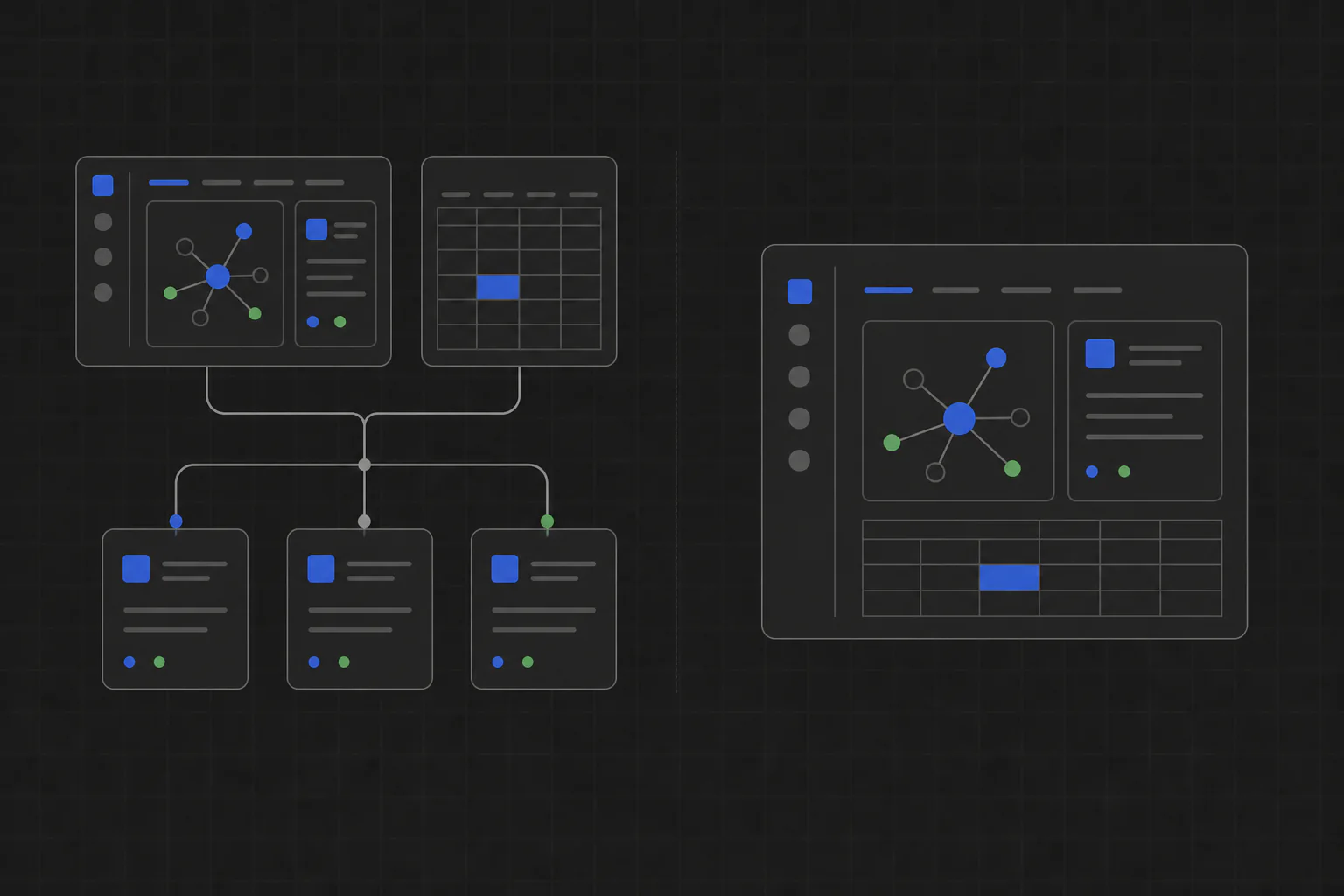
A hosted multi-part internal tool setup compared with one self-contained local application.
Short answer

Base44 and Lovable build hosted web apps fast and meter you by credits; they fit public-facing software. Claude Code builds anything on your own machine for a flat subscription; it fits internal tools, and paired with TinyAtom it also gets the install, sharing, and update lifecycle the platforms keep in their cloud, for free.

What each one actually is

Base44 is a hosted no-code platform, acquired by Wix in 2026, that turns a description into a working web app with database, authentication, and hosting included. Its pitch is the whole stack with no setup, and its public positioning centers on vibe coding.

Lovable is the fastest-growing of the European AI app builders. Same shape: describe an app in a browser, get a hosted web app, iterate by chat. It is strongest on front-end polish and speed to a first version.

Claude Code is not a platform at all. It is Anthropic’s coding agent: it plans, writes, runs, and fixes code on your computer. There is no builder UI, no hosting, and no credits; it comes with a Claude subscription and produces code you own.

Where the differences bite

Pricing model. Base44 and Lovable meter by credits, and iteration is the product: every revision, fix, and dead end draws from the meter. Community threads are full of builders watching credits vanish mid-debug, and Replit’s usage pricing has produced the loudest bill-shock stories in the category. Claude Code is a flat subscription: a heavy build costs the same as a light one.

What you own afterward. A Base44 or Lovable app lives on their infrastructure, behind their accounts, priced by their plans. A Claude Code build is source code on your machine, which is more to manage but entirely yours.

Where your data goes. A hosted internal tool means the customer list, the finances, or the candidate pipeline lives in the platform’s cloud. For a public product that is normal; for an internal tool it is a decision worth making deliberately.

Ceiling. The platforms are excellent inside their template space: dashboards, CRUD apps, forms over a database. Claude Code’s ceiling is whatever a developer could build, because that is what it is.

The comparison, for internal tools specifically.

TinyAtom appears as its own column because it changes what Claude Code lacks: it wraps the agent in a desktop workflow and supplies the lifecycle the platforms keep in their cloud.

Base44, Lovable, Claude Code, and Claude Code with TinyAtom compared for internal tools
Base44 Lovable Claude Code alone Claude Code + TinyAtom
What you get Hosted web app, stack included Hosted web app, polished front end Source code on your machine Installed local app with reviewed access
Pricing model Free tier, then credit plans Free tier, then credit plans Claude subscription or API Claude subscription; TinyAtom free
Iteration cost Draws credits per change Draws credits per change Flat Flat
Where data lives Platform cloud Platform cloud Your machine The computer that runs the tool
Team distribution Share a URL, platform accounts Share a URL, platform accounts None; manual Private company list, install + updates
Access review before run No No Manual Required capability review
Non-developer friendly Yes Yes Terminal-based Yes; no terminal
Best fit Public web apps, MVPs Public web apps, front ends Developers in codebases Internal tools on company data

Base44, Lovable, Replit, Bolt, and v0 are trademarks of their respective owners. TinyAtom is not affiliated with or endorsed by any of them. Platform details reflect public information as of August 2026; check each vendor for current pricing.

When each one wins

Pick Base44 or Lovable for software that must live at a public URL: a customer portal, a marketing site with logic, an MVP you want strangers to try. Hosting, accounts, and instant sharing are exactly what you are paying the credits for.

Pick Claude Code alone if you are a developer and the destination is a codebase you maintain. No wrapper should sit between you and your repository.

Pick Claude Code with TinyAtom when the software is internal: the users are your teammates, the data is company data, and nobody wants another hosted platform in the stack. The agent builds it, you review what it can access, it installs on the computers that use it, and updates flow through your private company list. If you are not a developer, start with Claude Code for non-developers; the workflow is in build internal tools with Claude Code.

Base44, Lovable, and Claude Code

Direct answers for teams choosing a builder.

Base44 vs Lovable: which is better?

They are close competitors. Community comparisons generally credit Base44 with a more complete out-of-the-box stack and Lovable with speed and polish for front-end work, and results vary by prompt. Both are hosted web-app platforms with credit-based pricing, so for internal tools the bigger question is whether a hosted credit-metered platform is the right shape at all.

Is Base44 or Lovable free?

Both have free tiers with limited credits, and real building typically moves you onto monthly credit plans. Costs scale with how much you iterate, and community threads regularly report burning through credits faster than expected while debugging.

Can Claude Code replace Base44 or Lovable?

For internal tools, yes, and often better: Claude Code is not metered per edit, it builds whatever a developer could, and the result is code you own. Its gaps are the terminal interface and the missing lifecycle. TinyAtom fills both: it drives Claude Code from a desktop app and turns the output into an installable, shareable, updatable tool.

What about Replit, Bolt, and v0?

Replit is the most complete hosted platform of the group and also the one whose usage-based pricing draws the most complaints. Bolt and v0 are strongest for prototypes and front-end work. All three, like Base44 and Lovable, build hosted web apps, so they compare the same way for internal tools: fine for public-facing software, an odd fit for tools that touch company data.

Which should I pick specifically for internal tools?

If the tool must live at a public URL for people who cannot install anything, pick a hosted platform. Otherwise a local-first workflow fits internal tools better: the agent your company already pays for builds it, you review what it can access, it installs on the computers that use it, and no company data moves to a platform cloud. That workflow is TinyAtom, and it is free.

Do these comparisons change with Base44's acquisition by Wix?

Wix acquired Base44 in 2026, which signals long-term investment but also a consumer-web direction. Nothing in this comparison depends on the ownership; the structural difference that matters for internal tools is hosted-and-metered versus local-and-free.

Build internal tools without credits or a platform cloud.

Free to use. Runs on your computer. No servers required.